
Search DeKalb County Property Records
DeKalb County property records read best as a linked trail. Start an address in the assessor search. The result carries the parcel number, owner of record, taxing district, and legal-description clues that the other systems demand. An owner name can turn up more than one parcel, while the exact parcel number is the soundest key for matching a tax bill to a GIS map. The Recorder stays the authority for conveyances and recorded claims; the county publishes no official public grantor-grantee web index.
Each source answers a different question. XSoft and DEVNET describe the assessment roll. Gateway shows billed tax data. Beacon places the tax parcel on a map. A deed or recorded instrument documents a transfer or claim. None of those property records alone proves clear title, fixes a surveyed boundary, or delivers a current sale appraisal.
- Search XSoft Engage by address, owner, or property number and copy the result exactly.
- Carry the parcel number and legal description to the DeKalb County Recorder. Call 260-925-2112 to confirm the current index and image route.
- Check Indiana Gateway or DEVNET for the tax year, deductions, installments, and balance.
- Open the county-linked Beacon map for parcel position, zoning, aerial, flood, soils, and tax-district context.
- Ask the custodian for a plain or certified copy when the image or older record is not online.
DeKalb County Property Records Custodians
Three courthouse offices divide the main DeKalb County property records. The Recorder keeps deeds, mortgages, releases, liens, easements, and plats. The Assessor tracks taxable parcels, owners, land and improvement values, photos, sketches, exemptions, and appeals. The Treasurer bills and collects real-property taxes and special assessments, handles delinquency, and supports the tax-sale trail. Call the right desk first. An assessment card cannot replace a deed, and a tax bill cannot settle ownership.
DeKalb Property Search Fields
The county's XSoft landing prompt accepts an owner, an address, or a property number. DEVNET offers the deeper field set for a DeKalb County property search, including a house-number range. That range helps when one street address fails. It also helps when the question covers a short block. Preserve punctuation and leading zeroes in any parcel number. The official XSoft assessor search presents the county's three-key starting point.
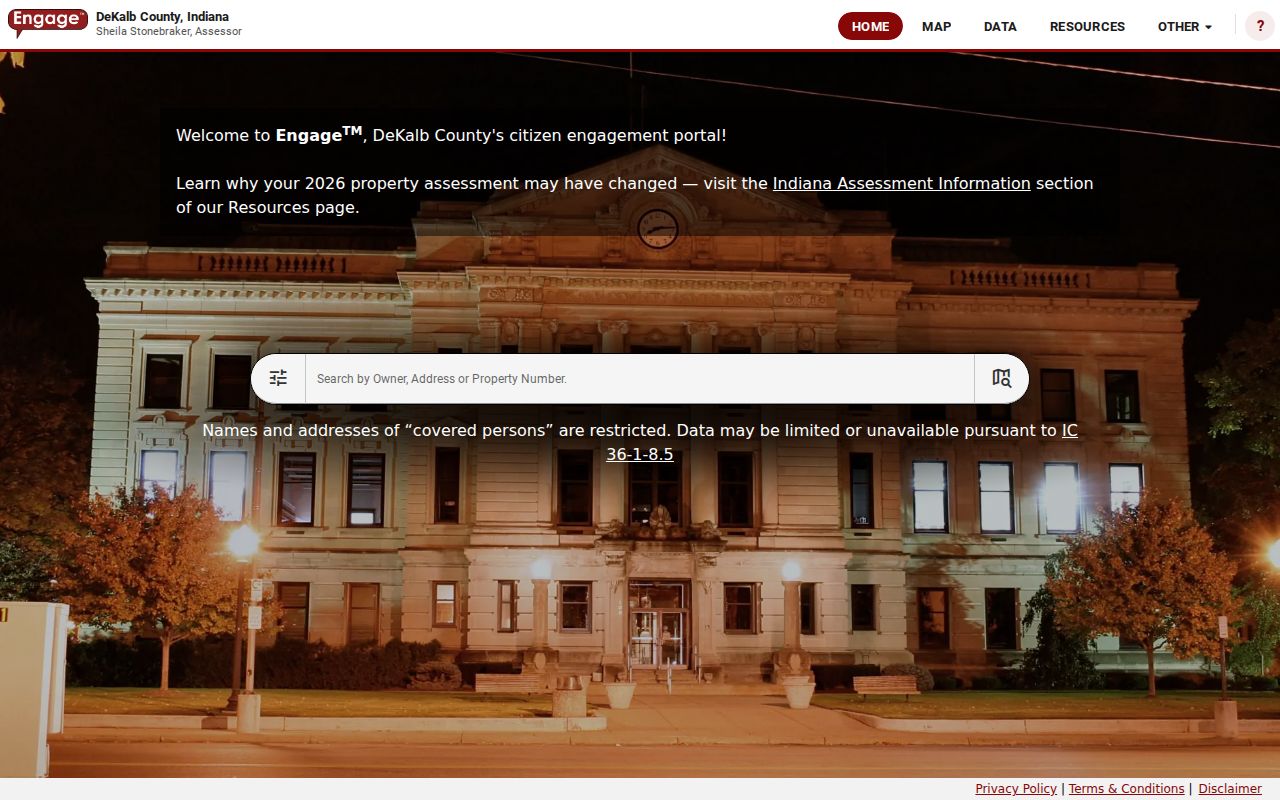
Owner, address, and property-number entry make it the first online stop before tax, map, or Recorder follow-up.
| Field | Use in DeKalb County | Search note |
|---|---|---|
| Owner Name | Find parcels tied to a person, trust, or entity | Try the name as printed on the bill |
| House Number Low/High | List an address or street range | Pair with street and city |
| Parcel Number | Match tax, assessor, and map records | Keep the exact format |
| Sale Date/Price | Filter assessor sale data | Do not treat it as an appraisal |
| Township/Tax District | Narrow edge and rural parcels | Useful when city labels conflict |
The portal timestamps show when each system was refreshed, not when a newly recorded deed reached the roll. Keep the situs address and the owner's mailing address separate. Mixing them up ruins a set of notes.
DeKalb Property Deed Access Gap
DeKalb County publishes no public grantor-grantee index or online deed image cutoff. That gap matters. A reader should not be pushed toward a commercial substitute or told that every deed is online. Start at the Recorder counter at 100 S Main Street, call 260-925-2112 before a trip, or make a focused request under the Indiana Access to Public Records Act.
Give the office the parcel number, current and prior names, situs address, legal description, instrument type, and a date range. Say whether you need an index entry, a plain image, or a certified copy. An emailed or mailed APRA request generally draws a response within seven calendar days, though an acknowledgment is not production. The Recorder can confirm current image and certification charges.
Map DeKalb County Parcels
The county GIS office links to Beacon. Beacon carries parcels, aerial context, zoning, flood, soil, and tax-district layers. The map connects an address to a parcel shape and legal-description clues. It works best near city and extra-territorial jurisdiction edges. There, a mailing city does not identify the permit office.
One warning applies across DeKalb County. A line in Beacon is reference data, not a boundary survey. The deed, recorded plat, easements, and a licensed survey control questions of legal rights. Ashley and Hamilton cross county lines. So a city label or ZIP cannot prove that DeKalb County is the custodian. Auburn's zoning and ETJ map shows the city-edge context. It is worth checking after the county parcel is found.
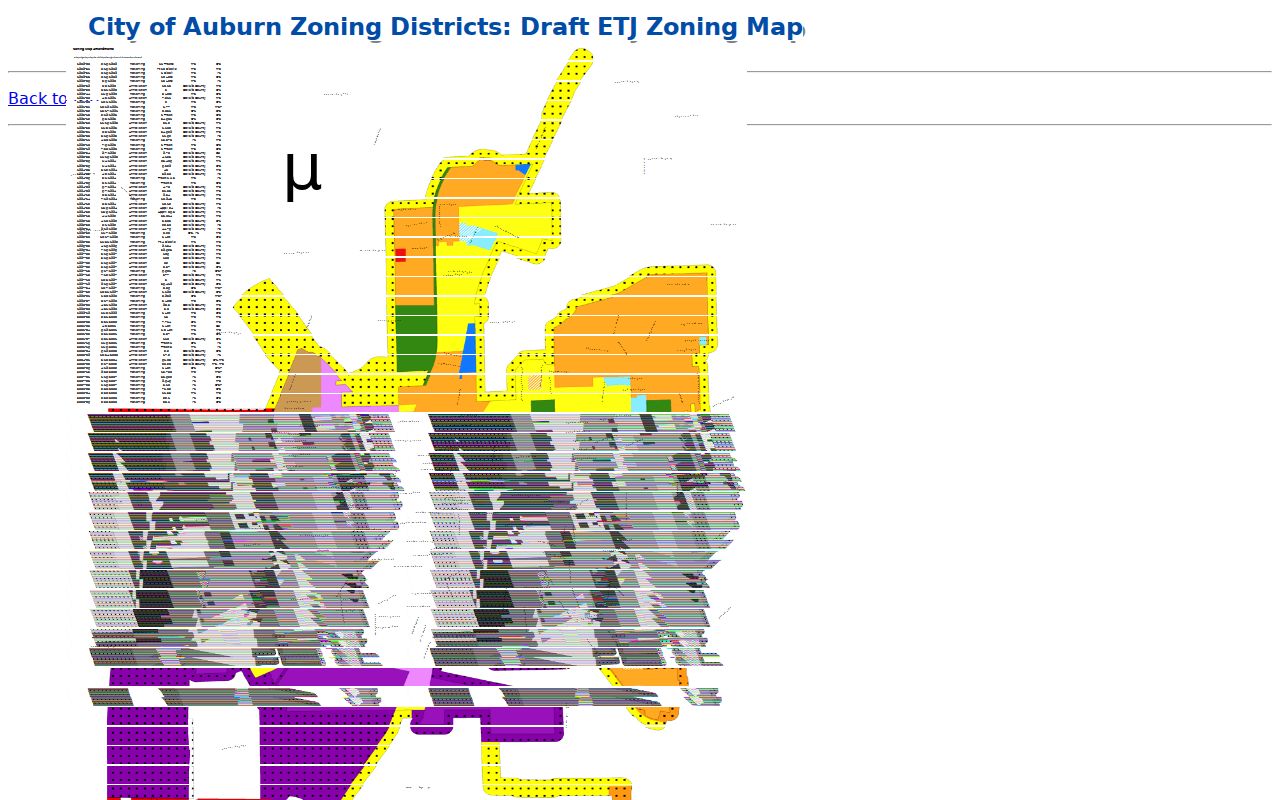
That map also carries its own warning. Current annexations and amendments should be confirmed with the city, never inferred from an older map alone.
DeKalb County Property Record Types
DeKalb County property records span ownership, taxation, geography, court action, and development approval. Each set has its own custodian and legal weight. Start with your question, then follow the parcel number and legal description across offices.
| Record Type | What It Documents | Kept By | Access |
|---|---|---|---|
| Deeds and releases | Transfers, parties, legal descriptions, recorded claims | Recorder | Counter, phone, focused APRA request |
| Assessment roll | Owner of record, parcel identity, taxable value | Assessor | XSoft, DEVNET, office copies |
| Tax bill | Pay year, deductions, installments, balance | Treasurer | Gateway, DEVNET, counter |
| Plats and parcels | Lot, block, tract, and map context | Recorder, GIS, planning | Beacon and recorded-copy request |
| Permits and zoning | Approved work, land use, subdivision review | City or county office | Document center and planning counter |
Use DeKalb County deed records for the recorded ownership trail. Turn to the property tax page for assessment and billing detail. Court records in MyCase can add foreclosure, partition, quiet-title, probate, and judgment context, though public documents vary by case and date.
Read a DeKalb Tax Bill
A sample DeKalb County tax bill shows why the labels matter. The parcel number 17-06-29-485-008.000-025 is a cross-system key. Don't try to decode it. The bill ties Auburn taxing unit 025 to Union Township, the Ford Place legal description, and a 2025 tax year payable in 2026. Two due dates and itemized rows follow. Tax year and pay year are separate facts. The Treasurer's Gateway tax lookup page displays the official form, shown below. Its search covers pay year, county, taxing unit, taxpayer, address, parcel, rate range, and total bill range. A billed balance proves neither market value nor title. Before any sale notice or closing, confirm payment and delinquency status with the Treasurer.
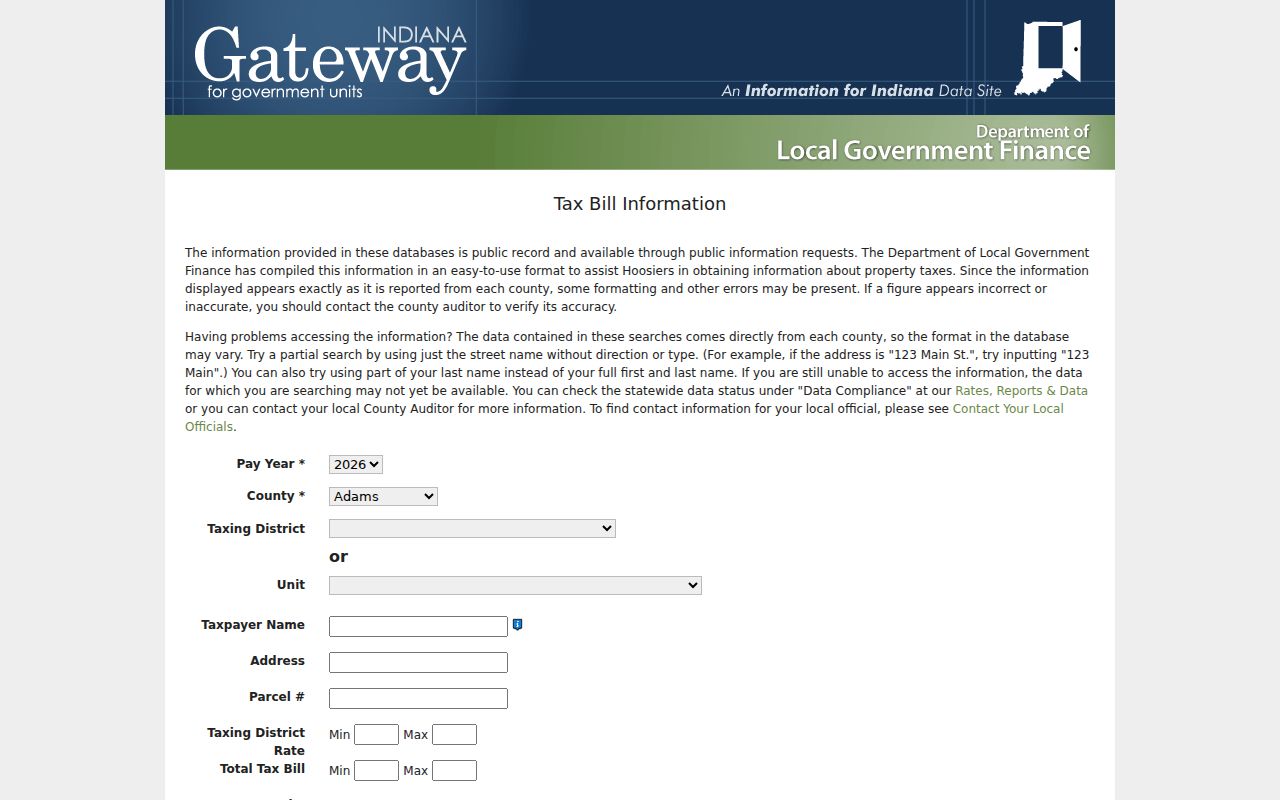
The form's county, year, address, and parcel controls make one thing clear. The parcel number is the clean bridge from an assessment result.
DeKalb Land Records Since 1836
The Indiana State Library DeKalb guide opens a strong offline route into old property records. Land-deed microfilm spans 1836 through 1901 across 33 reels. Grantor and grantee indexes cover overlapping spans. Mortgages run 1845 through 1852, and tract material begins in 1835. Deed Book A is marked missing. Book B covers 1837 through 1840. A 1913 courthouse fire destroyed some records, yet plenty of DeKalb County land records survived, so search both index directions. Note the book and page, compare the legal description, and fill any gap with probate, wills, plats, newspapers, and city directories. Auburn directories survive for selected years from 1925 onward. Garrett-Altona directories cover selected 1970s years. These sources give address context, not title proof.
DeKalb Tax Sales and Liens
Distressed-property work takes several sources. Gateway and DEVNET show bills and delinquent amounts. County tax-sale notices describe parcel listings and statutory procedure. They also list redemption rights, bidder limits, and the named auction route. The Sheriff's official sale page covers mortgage foreclosure sales. It warns that purchases carry no warranties and may remain subject to liens and easements. MyCase can surface public foreclosure, quiet-title, probate, or judgment dockets. The Recorder holds the recorded trail of liens, releases, deeds, and lis pendens. Never assume a delinquent balance means a sale happened. A later release may not clear every claim, either. Match each release to its original instrument and confirm current tax status with the Treasurer.
DeKalb Property Permit Jurisdiction Varies
Auburn, Garrett, and Butler share no single permit route. Auburn runs its own building and planning records plus zoning and ETJ material. Garrett points to its Plan Commission and Beacon for zoning checks. Butler's code assigns most building administration inside the city and its ETJ to DeKalb County. The city keeps improvement-location, fence, and land-use approvals. ZIP codes are only delivery clues. Verify the parcel in Beacon. Then ask the planning authority which jurisdiction held the file on the relevant date. Current development can also seed future assessment leads. Auburn's Watson Estates project began in 2025 with 131 planned lots. Reconstruction of the Auburn Hotel at 301 S Main was estimated to finish in 2026. A permit or project notice never proves the assessor has already added improvement value.
DeKalb Courts Add Property Context
Some property events surface in a court file before or beside any recorded instrument. The Indiana MyCase portal can locate public, nonconfidential DeKalb court matters. Foreclosure, partition, quiet-title, probate, and judgment cases all appear there. Search by party, business, case number, attorney, or citation where the live form allows. Wildcards and sound-like matching help with name variants. Coverage still varies by case and date. The DeKalb County Clerk holds Circuit, Superior I, and Superior II records. The Clerk also serves as the fallback for archived or unavailable filings. Request the docket entry, order, or document by case number when possible. A docket proves an event was filed, not that every claim was granted. Carry any judgment, sale order, or probate authority back to the Recorder, Assessor, and Treasurer. That shows how it shaped the land trail.
Limits of DeKalb Property Records
Public property records can reveal the county's owner-of-record entry, assessed value, and tax history. They also show mapped parcels, recorded transfers, liens, plats, and public court or planning events. But they can be old, incomplete, or shielded by confidentiality rules. Indiana's Address Confidentiality Program protects qualifying address information. The covered-person restrictions in IC 36-1-8.5 can protect it as well. A blank field is not proof that no record exists. Keep source labels straight. The assessor roll is not a deed. Beacon is not a survey. A bill is not an appraisal. When legal rights turn on the answer, get the underlying record from the custodian. Seek qualified title or survey help.
Lawful use. DeKalb County records support property research, purchase diligence, boundary questions, tax review, and civic transparency. Never use owner data to stalk, harass, or harm anyone.